

[Analysis] Do you still remember what we need to do before choosing the heat source and the water pump?
Yes, we need to know some basic information about the building. When we design the heating and cooling terminals, we first need to know some basic information: what is the purpose of the building; what is the building area, number of floors, and height; what is the thermal performance of the building; what are the meteorological parameters of the project location; whether water, electricity and gas are available; whether the owner has any special requirements; different building purposes have different energy consumption.
Different project locations may have significantly different building energy consumption.
Here we make an assumption. Assume that the project location is in Hangzhou, with 370 ordinary brick exterior walls and single-layer windows, and it is a bungalow. Due to the lack of calculation conditions, we refer to the heat index table in the "Design Code for Urban Heating Network" and take the heat index of 120 W/m², which is for single-story buildings such as canteens and restaurants. Please note that this heat index is for continuous heating. It is used for the overall estimation of the building's energy consumption.
| Building Type | Recommended values for heating indicators(W/m²) | |
| Without Energy-Saving Measures | With Energy-Saving Measures | |
| Residential | 50-70 | 30-45 |
| Office | 60-80 | 35-50 |
| Office | 80-100 | 45-60 |
| Shopping Mall | 55-75 | 35-60 |
| School | 55-75 | 35-50 |
| Hospital | 65-85 | 40-55 |
It should be noted that the source of this table is "Code for Design of Urban Heating Network" CJJ34-2010. Assuming intermittent operation at the outdoor design temperature for a cumulative 18 hours, the equivalent heat index is:
120 x 24 / 18 = 160 W/m².
Next, we calculate the required heat load: 160 W/m’x 80m²=12800 W
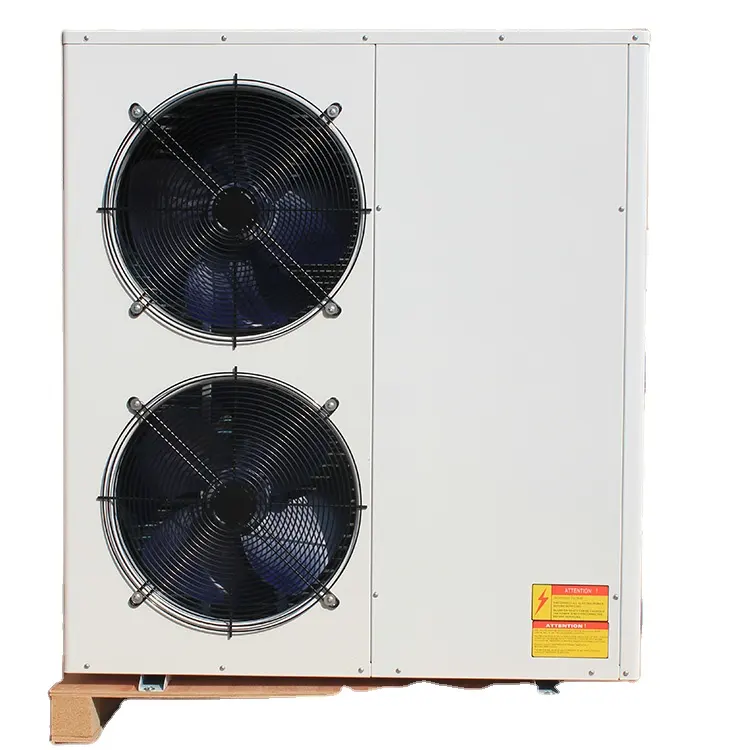
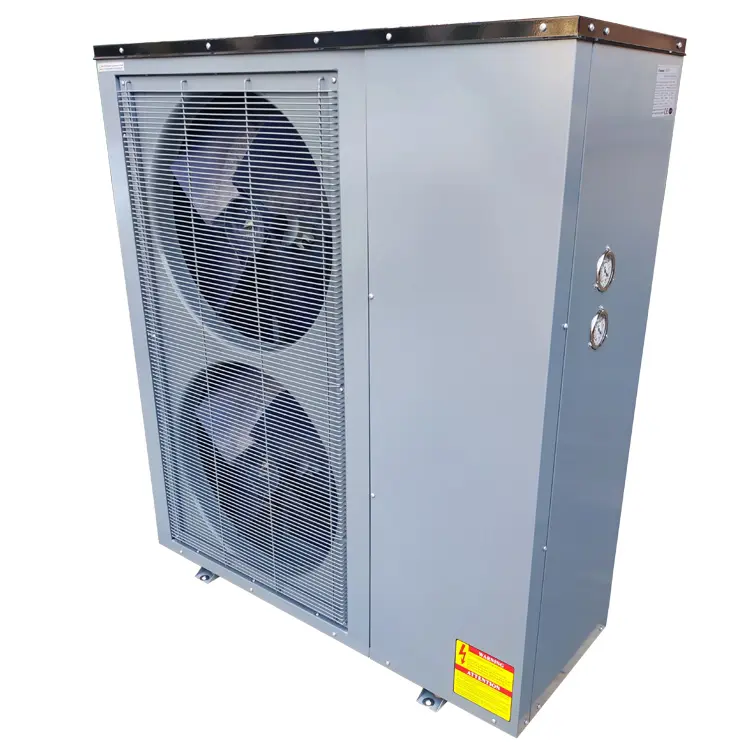
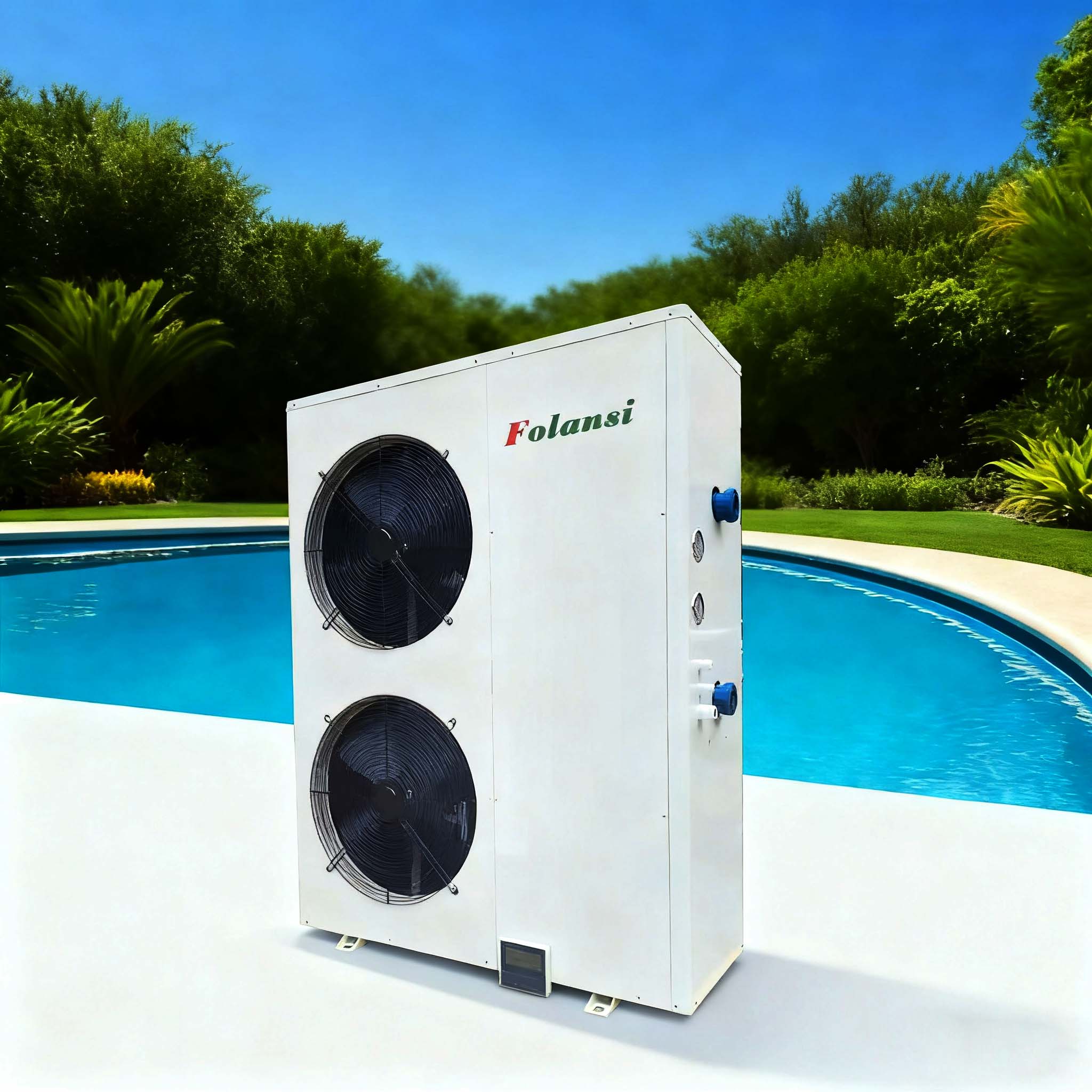
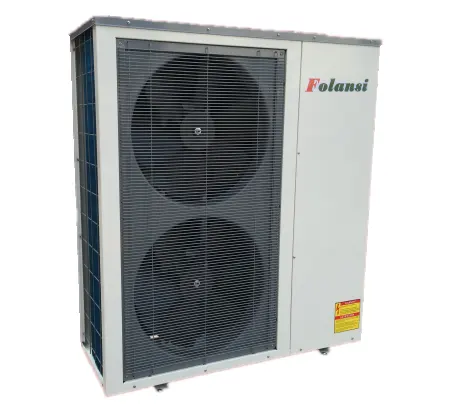
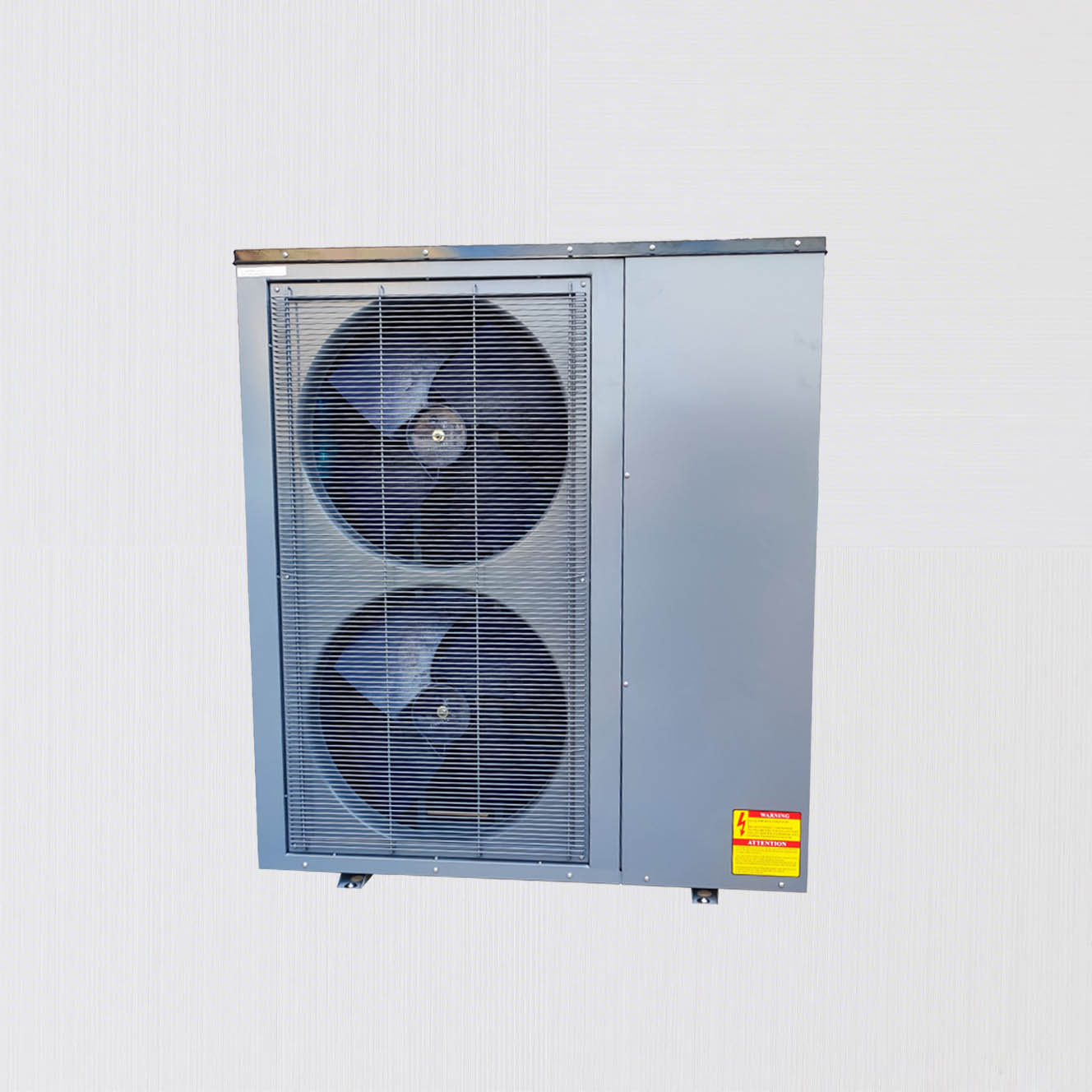
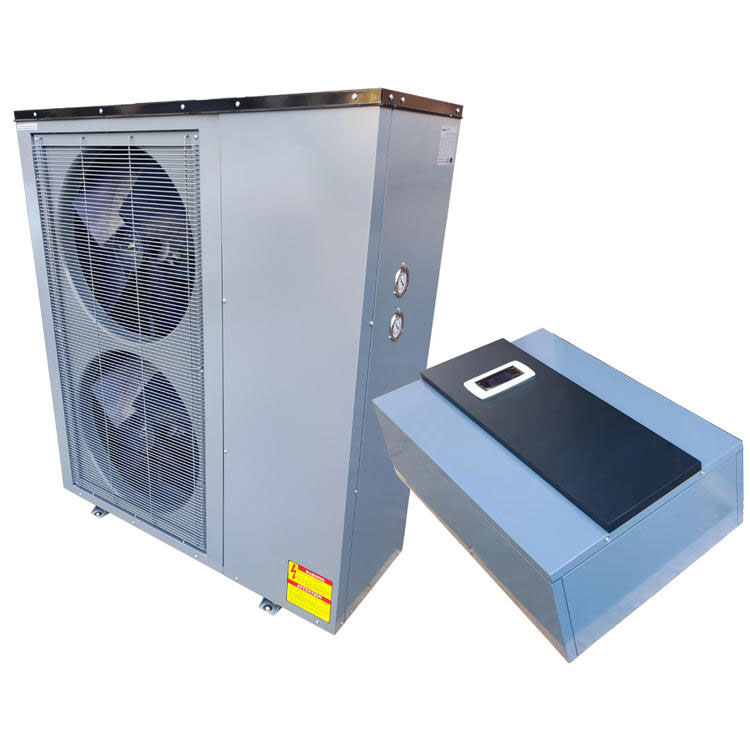
We know that the electric power of one horsepower is 735W. Here we assume that the COP of a certain heat pump at the outdoor design temperature in Hangzhou is 2.5. We calculate the required horsepower of the heat pump:
12800/735/2.5 = 7 horsepower
If we assume continuous operation at the outdoor design temperature, the required heat pump would be: 120 x 80/735/2.5 = 5 horsepower
From this, it can be seen that the size of the air source heat pump unit required varies depending on the operating conditions we design. For instance, in this project, if configured with 7 horsepower, it can provide the necessary "rest time" for the unit, avoiding metal fatigue. During extreme weather, it can also increase the operating time, enhancing the reliability of heating. However, if a 5-horsepower air source heat pump unit is chosen, the advantage is cost savings and it can meet the requirements for most of the time. But the drawback is that it may have to operate continuously during extreme weather, which could increase the probability of unit failure, leading to a situation where the more it is used, the more problems arise, and the colder it gets, the more likely it is to break down.
Contact name: Jimmy liang
Tel: 008615975514375, 00862089391272, 00862085105335
| No.16 Zhongzhi Industrial Park ,malian Road ,Lishui town,Nanhai district , Foshan city,Guangdong province china | |
| 00862089391272, 00862085105335 | |
| 00862089391272 | |
| Sales@folansi.com | |